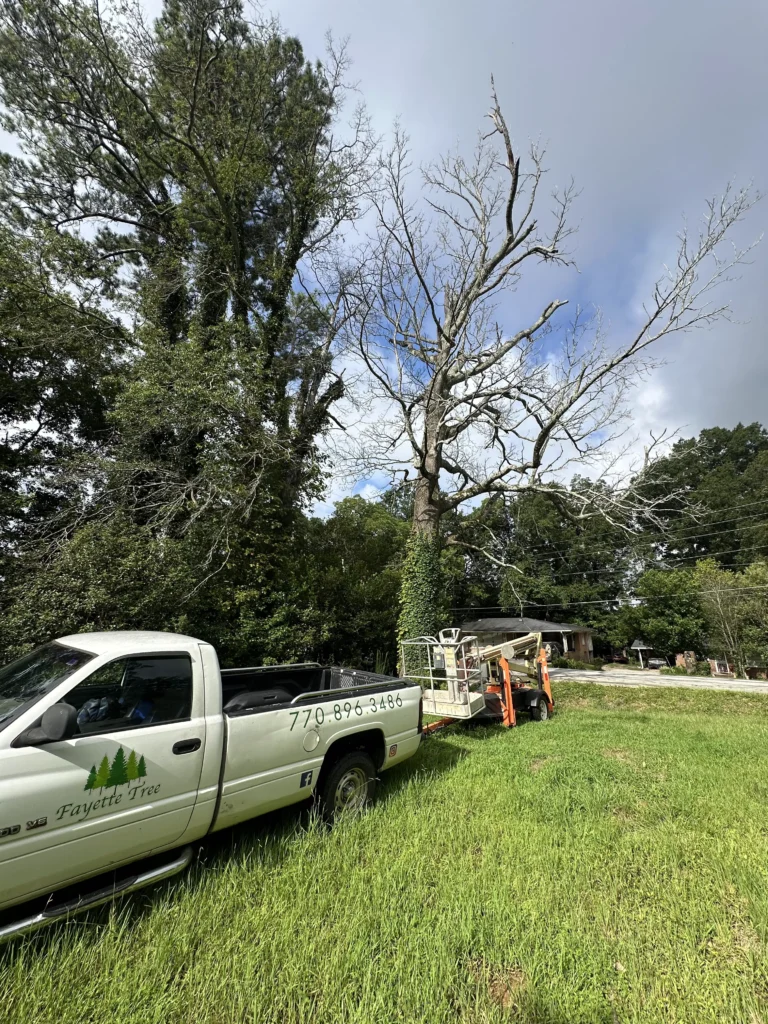
Fayette Tree brings more than a decade of hands-on tree experience to evaluating tree condition, property factors, and whether preservation or removal is the better path.
We do not automatically recommend fertilizer, aeration, or another treatment simply because a tree looks stressed; the service should match the tree and site conditions.
If a tree appears worth treating, we explain the available options, and if significant structural decline makes removal more appropriate, we will tell you that too.
Thinning foliage, early leaf drop, dead branches, slow growth, discolored leaves, insect activity, compacted soil, and changes around the root zone can all be reasons to take a closer look at a tree. The visible symptom does not always reveal the underlying issue, which is why Fayette Tree begins by considering the tree’s overall condition, recent property changes, soil conditions, drainage, root-zone disturbance, canopy appearance, and other visible factors before recommending a service. Some trees may benefit from soil aeration, targeted tree treatments, fertilization, pruning, or changes in how the root zone is managed, while others may have structural problems that tree-health treatments cannot correct. Our goal is to recommend a practical next step based on what the tree actually needs rather than selling a treatment by default. If the tree is too compromised to retain safely, we can also discuss professional tree removal.
 Posted on Google
 Sam Washington
Trustindex verifies that the original source of the review is Google.
Dwarven was very professional fair price to remove a down tree and clean up. I would recommend him to anyone. Great JobPosted on Google Michele Michael PettiesHighly recommend. Prompt service. Reasonable price. Good cleanup of debri after removal. Will definitely use again!Posted on Google
 Vinny “CHENTE”Had a great experience with Fayetteville tree service 5 star recommendPosted on Google
 ven armourWe received a competitive quote from Fayette Tree. We agreed too terms and appointment scheduled. Dewarren arrived on scheduled date and time. Dewarren, was professional, polite and conscientious. We will absolutely use Fayette Tree again for any tree care. Highly recommended.Posted on Google
 Danielle AilingerDewarren was very professional and quoted us a fair price for removal of a large tree. He communicated well and the company offers multiple payment options. It was a great experience overall.Posted on Google
 Della SealsI'D HIGHLY RECOMMEND FAYETTE TREE SERVICE DEWARREN TO ANYONE, THE ESTIMATES CAN'T BE BEAT , I REC GREAT SERVICE FRM START TO FINISH IMMACULATE WORK VERY PROFESSIONAL MUCH APPRECIATED VERY PLEASED TY .Posted on Google
 Fran MackeyI had an exceptional experience with Fayette Tree, a neighbor referred. They were prompt, efficient, just very focused on getting the job done in a timely manner, communication was consistent from start to finish. Cleaned up after, nothing was left undone. I highly recommend! Thank you for great service!!!Posted on Google
 Carol HackmanI was very impressed with the level of professionalism shown by this company. After taking the tree down and removing all limbs and debris, he blew the area off and left it neater than before. Highly recommend.Posted on Google
 Tamika JohnsonThis is our 3rd time using Fayette Tree and we made the right decision again. DeWarren came out to look at the job and to give us a great estimate. The next day he came to do the job. The timing was great! Dewarren did an excellent job with the tree removal and the clean up. If you’re looking for a professional and great value for tree removal, look no further, DeWarren at Fayette Tree is your guy. Thanks again DeWarren! This is our 3rd time using Fayette Tree service. This was an emergency call and within an hour Dewarren arrived, assessed the situation and gave an estimate. They arrived to complete the job at the estimated time. Fayette Tree completed the job in a timely manner and cleaned the area very well. Fayette Tree service will continue to receive my business and referrals because they provide excellent services. Please don’t hesitate to give them a call, you will be very pleased with the results.Verified by TrustindexTrustindex verified badge is the Universal Symbol of Trust. Only the greatest companies can get the verified badge who has a review score above 4.5, based on customer reviews over the past 12 months. Read more
Tree-treatment costs vary depending on the number and size of trees, the type of concern, the area of the root zone, soil conditions, treatment method, materials required, equipment access, and whether multiple visits are recommended. Soil aeration around one accessible tree will have a different scope from treating several mature trees across a larger property. Fayette Tree evaluates the tree and site before providing an estimate so the recommended service can be tied to the conditions actually observed. We also explain what is included, whether follow-up may be useful, and whether related work such as pruning should be completed separately. Because tree-health services cannot guarantee how a living tree will respond, we focus on appropriate care, realistic expectations, and clear communication rather than promising a particular outcome.