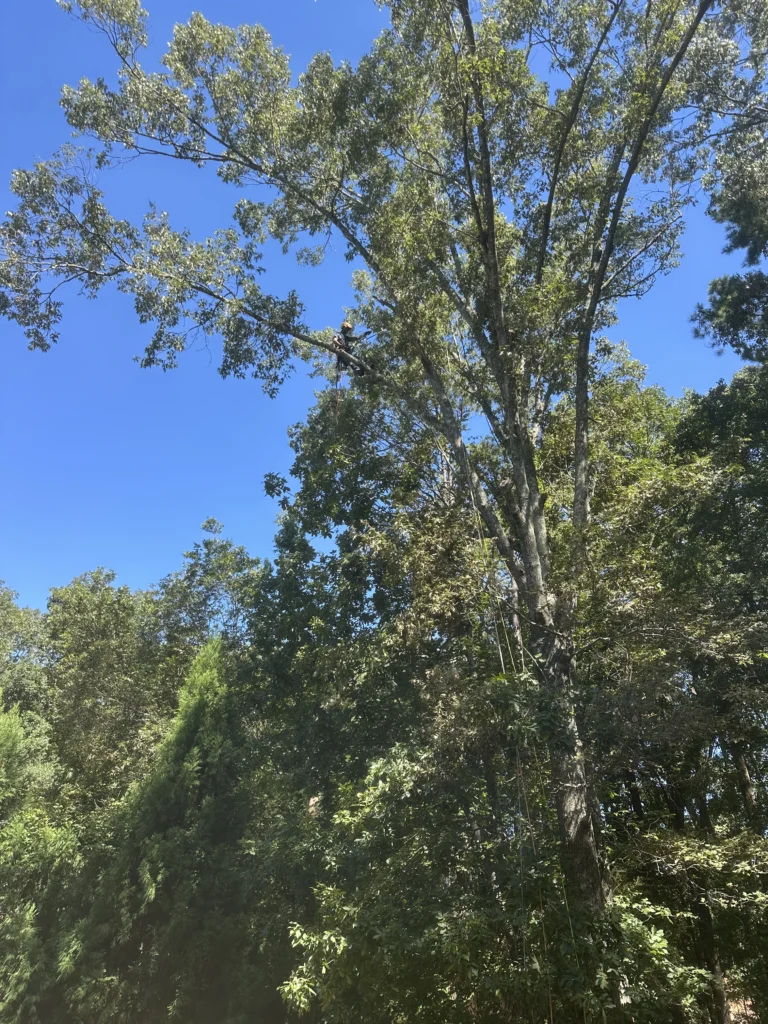
Fayette Tree brings more than a decade of hands-on tree-work experience to trimming and pruning trees throughout Fayetteville and surrounding communities.
We use selective pruning based on the branches that actually need attention rather than indiscriminately cutting back the entire crown.
We inspect the tree, access, branch size, surrounding structures, and requested scope before providing a clear on-site estimate.
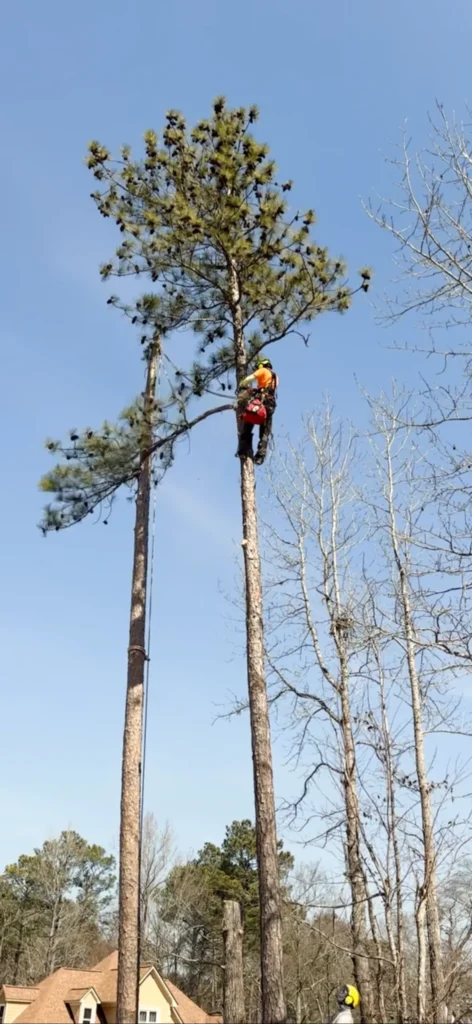
Tree trimming should have a specific purpose. Fayette Tree may recommend pruning to remove dead or broken limbs, improve clearance from a roof or driveway, address crossing or poorly positioned branches, reduce certain overhead hazards, or improve the structure of a tree that has become overgrown. That is very different from topping, where major branches or the upper crown are cut back indiscriminately simply to make the tree shorter. Proper pruning focuses on individual branches and appropriate cut locations while preserving as much of the tree’s natural structure as practical. We evaluate the species, branch size, canopy condition, surrounding property, and customer’s goal before recommending how much should be removed. If the tree has major trunk, root, or structural problems that pruning will not solve, Fayette Tree will explain that rather than selling trimming that is unlikely to address the underlying concern.
 Posted on Google
 Sam Washington
Trustindex verifies that the original source of the review is Google.
Dwarven was very professional fair price to remove a down tree and clean up. I would recommend him to anyone. Great JobPosted on Google Michele Michael PettiesHighly recommend. Prompt service. Reasonable price. Good cleanup of debri after removal. Will definitely use again!Posted on Google
 Vinny “CHENTE”Had a great experience with Fayetteville tree service 5 star recommendPosted on Google
 ven armourWe received a competitive quote from Fayette Tree. We agreed too terms and appointment scheduled. Dewarren arrived on scheduled date and time. Dewarren, was professional, polite and conscientious. We will absolutely use Fayette Tree again for any tree care. Highly recommended.Posted on Google
 Danielle AilingerDewarren was very professional and quoted us a fair price for removal of a large tree. He communicated well and the company offers multiple payment options. It was a great experience overall.Posted on Google
 Della SealsI'D HIGHLY RECOMMEND FAYETTE TREE SERVICE DEWARREN TO ANYONE, THE ESTIMATES CAN'T BE BEAT , I REC GREAT SERVICE FRM START TO FINISH IMMACULATE WORK VERY PROFESSIONAL MUCH APPRECIATED VERY PLEASED TY .Posted on Google
 Fran MackeyI had an exceptional experience with Fayette Tree, a neighbor referred. They were prompt, efficient, just very focused on getting the job done in a timely manner, communication was consistent from start to finish. Cleaned up after, nothing was left undone. I highly recommend! Thank you for great service!!!Posted on Google
 Carol HackmanI was very impressed with the level of professionalism shown by this company. After taking the tree down and removing all limbs and debris, he blew the area off and left it neater than before. Highly recommend.Posted on Google
 Tamika JohnsonThis is our 3rd time using Fayette Tree and we made the right decision again. DeWarren came out to look at the job and to give us a great estimate. The next day he came to do the job. The timing was great! Dewarren did an excellent job with the tree removal and the clean up. If you’re looking for a professional and great value for tree removal, look no further, DeWarren at Fayette Tree is your guy. Thanks again DeWarren! This is our 3rd time using Fayette Tree service. This was an emergency call and within an hour Dewarren arrived, assessed the situation and gave an estimate. They arrived to complete the job at the estimated time. Fayette Tree completed the job in a timely manner and cleaned the area very well. Fayette Tree service will continue to receive my business and referrals because they provide excellent services. Please don’t hesitate to give them a call, you will be very pleased with the results.Verified by TrustindexTrustindex verified badge is the Universal Symbol of Trust. Only the greatest companies can get the verified badge who has a review score above 4.5, based on customer reviews over the past 12 months. Read more
Tree trimming costs vary based on the height and spread of the tree, number and size of branches being removed, tree condition, access for workers and equipment, proximity to roofs or utility areas, rigging requirements, debris volume, and the amount of cleanup included. A small ornamental tree in an open yard may require far less work than a mature hardwood with heavy limbs over a home or driveway. Timing can matter as well because the appropriate pruning season varies by species and the reason the work is being performed, although dead, broken, or hazardous limbs may need attention when the problem is discovered. Fayette Tree evaluates the tree in person and explains what the estimate covers, including branch removal and the agreed-upon cleanup. When a tree is too damaged or structurally compromised for pruning to solve the concern, we can also discuss tree removal rather than repeatedly trimming a tree that should be evaluated for removal.